Asia/Ho_Chi_Minh
BlogApril 3, 2026

This Week in Art History: Birthdays

Hana
This Week in Art History: Birthdays
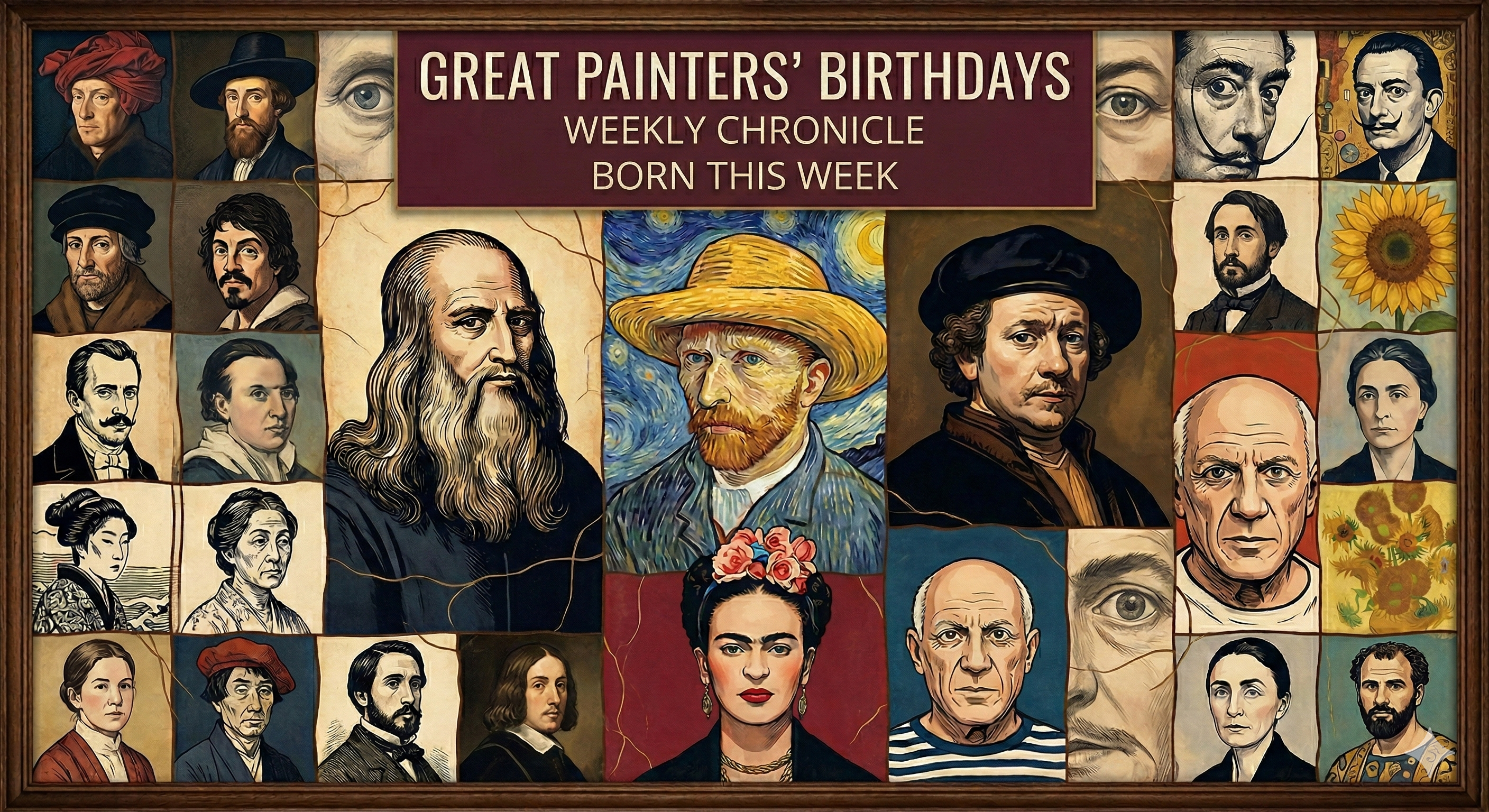
Welcome to this week's art history roundup! Join us as we celebrate the birth anniversaries of some of the most influential painters whose visions shaped the world of art. From pioneering Romantics to Post-Impressionist masters and Surrealist innovators, this week's featured artists invite us to explore their enduring legacies and discover the unique brilliance they brought to their canvases. credit to The Metropolitan Museum Francisco Goya, a monumental figure in art history, is celebrated for his pivotal role in pioneering Romanticism. His extensive oeuvre includes striking portraits, incisive social commentary, and a series of dark, imaginative 'Black Paintings' that reveal a profound inner world. He fearlessly depicted the brutal realities of war and human folly, making his art a powerful reflection of his tumultuous times. Known for: pioneering Romanticism, his unflinching portrayals of war, and his dark, imaginative 'Black Paintings'. Key works: The Third of May 1808, Saturn Devouring His Son, The Naked Maja. What to look for: Goya's work often explores the human condition with profound depth, moving from commissioned portraits to deeply personal and often disturbing visions, reflecting the tumultuous era of his life. His mastery of light and shadow, combined with his psychological insight, makes his art timeless and deeply affecting.
Artwork by Vincent van Gogh

Artwork by Vincent van Gogh

credit to The Metropolitan Museum Vincent van Gogh, a towering figure in Post-Impressionism, continues to captivate audiences with his vibrant colors, dynamic brushwork, and emotional intensity. His work, though largely unappreciated during his lifetime, became hugely influential, shaping modern art. Van Gogh's unique style translates personal struggles and profound observations into universal expressions of beauty and suffering. Known for: pioneering Post-Impressionism, expressive use of color and impasto. Key works: The Starry Night, Sunflowers, Self-Portrait with Bandaged Ear. What to look for: Look for the energetic brushstrokes, the intense, often swirling colors, and the raw emotion embedded in each scene. His landscapes, still lifes, and portraits all convey a powerful sense of his inner world and his deep connection to nature and humanity. credit to The Metropolitan Museum Max Ernst, a visionary German artist, was a key pioneer of both Dada and Surrealism, movements that challenged conventional art and thought. His innovative use of techniques like frottage and grattage allowed him to create dreamlike, often unsettling, compositions that delved into the subconscious. Ernst's work explores themes of desire, violence, and the absurd, forging new pathways for artistic expression. Known for: pioneering Dada and Surrealism, innovative use of frottage and grattage. Key works: The Elephant Celebes, Europe After the Rain II, Two Children Are Threatened by a Nightingale. What to look for: His works often feature fantastical creatures, fragmented landscapes, and symbolic imagery that invite viewers to interpret their own meanings. Ernst's ability to blend the rational with the irrational creates a powerful and enduring impact, making his art a captivating journey into the surreal.
Artwork by Jean-Honoré Fragonard

Artwork by Jean-Honoré Fragonard

credit to The Metropolitan Museum Jean-Honoré Fragonard, a master of the Rococo style, is celebrated for his vibrant, playful, and often sensual paintings that captured the spirit of 18th-century French aristocracy. His works are characterized by their lighthearted charm, fluid brushwork, and a palette of soft, luminous colors. Fragonard's art embodies the elegance and romanticism of his era. Known for: Rococo style, charming and sensual genre scenes, portraits. Key works: The Swing, The Progress of Love series, A Young Girl Reading. What to look for: Notice the delicate interplay of light and shadow, the swirling draperies, and the expressions of joy and flirtation in his figures. His paintings often convey a sense of movement and spontaneity, inviting viewers into a world of romantic dalliances and pastoral beauty. As we wrap up this week's journey through art history, we hope you've enjoyed celebrating these incredible artists. Their enduring contributions continue to inspire and challenge us, reminding us of the timeless power of creativity. Until next time, keep exploring the vibrant tapestry of art!
Share this post:
On this page